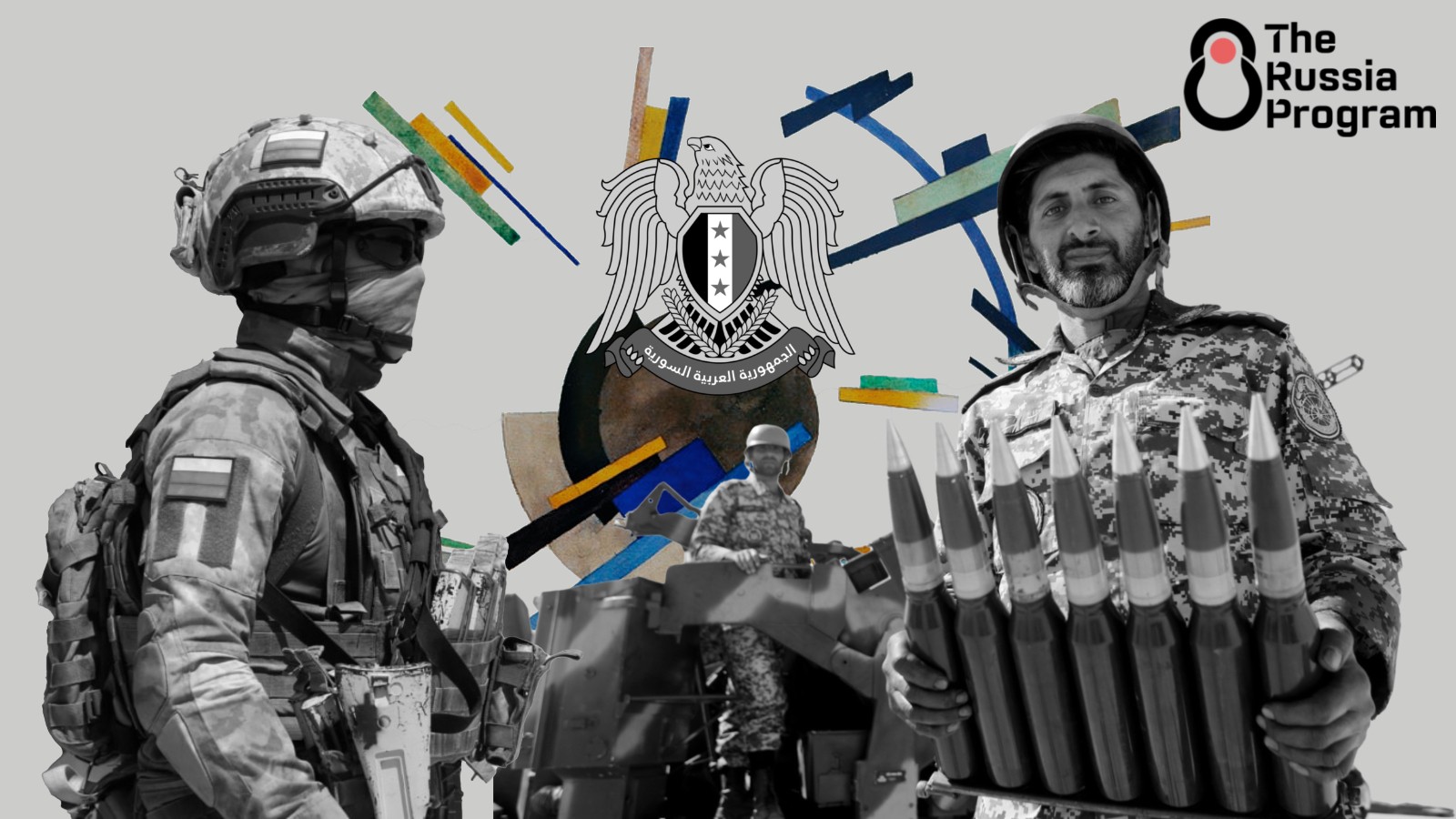
Russia-Iran: Syria Alliance Hides Deeper Mideast Rivalries
The complex web of relationships in the Middle East often presents paradoxes, and few are as intricate as the developing **iran russland beziehung**. While globally perceived as staunch allies propping up the Assad regime in Syria, a closer examination reveals a partnership of convenience, forged by immediate geopolitical necessity but shadowed by profound, long-term strategic divergences. Experts widely agree that while their collaboration in Syria has been instrumental in reshaping the conflict's trajectory, the underlying national interests of Moscow and Tehran are fundamentally at odds, setting the stage for potential future friction.
A Coalition of Convenience: United Against US Hegemony
At the heart of the current **iran russland beziehung** lies a shared objective: to curtail American influence in the Middle East. This common ground has provided the impetus for their robust military and diplomatic cooperation, particularly in Syria. For Russia, supporting Bashar al-Assad was a strategic move to reassert its global power, maintain a vital naval presence in the Mediterranean via Tartus, and demonstrate its capacity to act decisively on the international stage alongside its allies. Syria, a long-standing partner, offered Russia a critical foothold in a region where its influence had waned after the Cold War.
Iran, on the other hand, views its involvement in Syria as integral to its vision of a "Shiite Axis" spanning Tehran, Baghdad, and Damascus, extending influence towards Lebanon and the Mediterranean. The rise of extremist Sunni groups like ISIS, which ideologically targeted Shiites, provided a direct threat and a strong justification for Iran's intervention. This alignment of interests saw Russia provide crucial air support, while Iran supplied the necessary ground forces, including its Revolutionary Guard Corps (IRGC) and proxy militias like Hezbollah, proving an indispensable combination for the Assad regime's survival. Moscow's commitment to this partnership is so significant that it has publicly defended Iran on other contentious issues, such as the Iranian nuclear program. Russian Foreign Minister Sergei Lavrov, for instance, has firmly stated that Iran adheres to its international nuclear obligations, placing the blame for non-compliance squarely on the United States' withdrawal from the JCPOA. This diplomatic backing underscores Russia's strategy to project stability through its alliances, even if those alliances mask deeper rivalries. For a more detailed look into their operational coordination, see
Syria's Crucible: Unpacking the Complex Russia-Iran Alliance.
Syria: A Battleground for Influence, Not Just ISIS
While the stated goal was stabilizing Syria and eradicating terrorist threats, Syria has concurrently become a crucial arena for both Russia and Iran to advance their respective regional ambitions. For Iran, the war allowed it to consolidate its presence, establish supply lines, and entrench its network of proxies across the Levant. Iranian financing has been a lifeline for the war-torn Assad regime, and without the boots on the ground provided by pro-Iranian forces, the Syrian army would likely not have recaptured the estimated 60% of Syrian territory it now controls. This extensive ground presence has granted Iran significant leverage and deepened its strategic depth.
Russia’s objectives, while overlapping in supporting Assad, diverge in the specifics of post-conflict Syria. Moscow aims for a centralized, stable Syrian state under Assad's leadership, one that remains a loyal client and preserves Russian strategic assets. However, Iran's vision involves a more decentralized influence, fostering a strong network of Shiite-aligned forces and institutions that would guarantee its regional hegemony. Furthermore, the conflict has inadvertently benefited Assad by causing the displacement of large numbers of Sunni Muslims, historically a demographic stronghold of opposition to his Alawite-led government. This demographic shift potentially solidifies Assad's long-term hold on power, a factor that both Russia and Iran pragmatically leverage, albeit for different ultimate ends. The intricate dynamics underscore that while fighting a common enemy, they are simultaneously carving out their own spheres of influence within the same battleground.
The Elephant in the Room: Israel and Regional Power Plays
A significant stressor in the **iran russland beziehung** is Israel. Iran openly challenges Israel's right to exist and has used the Syrian conflict to position advanced weaponry and proxy forces dangerously close to Israel's borders. For Israel, the entrenchment of pro-Iranian militias and the potential for a direct land bridge of influence from Tehran to Beirut represent an existential threat that it will not tolerate. Consequently, Israel has conducted numerous airstrikes against Iranian military installations and weapons convoys in Syria, often with Russia's tacit understanding, if not explicit approval.
Despite occasional verbal condemnations from Moscow regarding Israeli actions, Russia has largely turned a blind eye to these strikes. This pragmatic stance highlights Russia's priority: maintaining its strategic relationship with Israel, a powerful regional actor, while also preserving its core interests in Syria. This delicate balancing act reveals the limits of Russia's commitment to Iran; Moscow is unwilling to risk direct confrontation with Israel to protect Iranian assets. The United States, too, has signaled a willingness to accept Assad's continued rule in Syria, provided he distances himself from Iran. However, Assad's room for maneuver is severely limited. His regime remains deeply reliant on both Russian and Iranian support, making any independent shift in allegiance extremely difficult, if not impossible. This creates a precarious situation where Assad is a pawn in a larger geopolitical game, his survival inextricably linked to a complex and often conflicting network of external patrons. For more insights into how their regional goals diverge, explore
Iran & Russia: Shared Goals in Syria, Conflicting Mideast Futures.
Looming Rivalries: The Scramble for Post-Conflict Dominance
Beyond the immediate crisis in Syria, the long-term prognosis for the **iran russland beziehung** points towards increasing friction. Both nations harbor ambitions for a dominant, hegemonic role in the Middle East, and their visions for the region are not entirely compatible. Russia's traditional influence through state-to-state relations and military power often clashes with Iran's ideologically driven expansionism, which relies on cultivating non-state actors and promoting a specific religious-political agenda.
Areas of potential future conflict include:
* **Economic Opportunities:** Post-war reconstruction in Syria, control over energy routes, and access to new markets will be fiercely contested. Both Russia and Iran will seek to capitalize on these opportunities, potentially leading to bidding wars and competition for contracts.
* **Political Influence:** Who will be the primary external power broker in a "stabilized" Syria? Russia aims to restore a centralized state under Assad that answers primarily to Moscow, while Iran wants a Syria that is part of its regional network, enhancing its anti-Western and anti-Israeli stance.
* **Regional Hegemony:** Beyond Syria, both powers aspire to be the key security guarantor and power broker across the broader Middle East. This includes competition for influence in Iraq, Central Asia, and even the Caucasus, where their historical spheres of interest may overlap.
* **Energy Markets:** As major oil and gas producers, Russia and Iran are natural competitors in global energy markets. While they might coordinate on specific tactical fronts (e.g., OPEC+), their long-term economic interests could diverge, especially concerning market share and pricing strategies.
Experts predict that once the immediate threat of instability diminishes, the inherent clash of these hegemonic aspirations will become more pronounced. The strategic tightrope walk both nations currently navigate suggests a temporary alliance rather than a deep, enduring partnership.
Conclusion
The **iran russland beziehung** exemplifies a classic geopolitical paradox: two powers united by shared adversaries and immediate tactical goals, yet fundamentally divided by long-term strategic ambitions. Their alliance in Syria has been undeniably effective in achieving their common aim of propping up the Assad regime and countering Western influence. However, beneath this veneer of cooperation lie distinct national interests, competing visions for regional order, and differing approaches to key regional actors like Israel. As the Syrian conflict evolves from active warfare to political stabilization and reconstruction, the cracks in this alliance of convenience are likely to widen, revealing the deeper rivalries that could reshape the geopolitical landscape of the Middle East for years to come. Understanding this complex dynamic is crucial for any analysis of future regional stability.